Se Connecter/S’inscrire
Votre courriel a été envoyé.
15 S Main St - New Hope Methodist Church Immeuble de 6 200 pi² • Spécialité • À vendre 9 405 661 $ CAD • New Hope, PA 18938
Certaines informations ont été traduites automatiquement.
Faits saillants de l'investissement
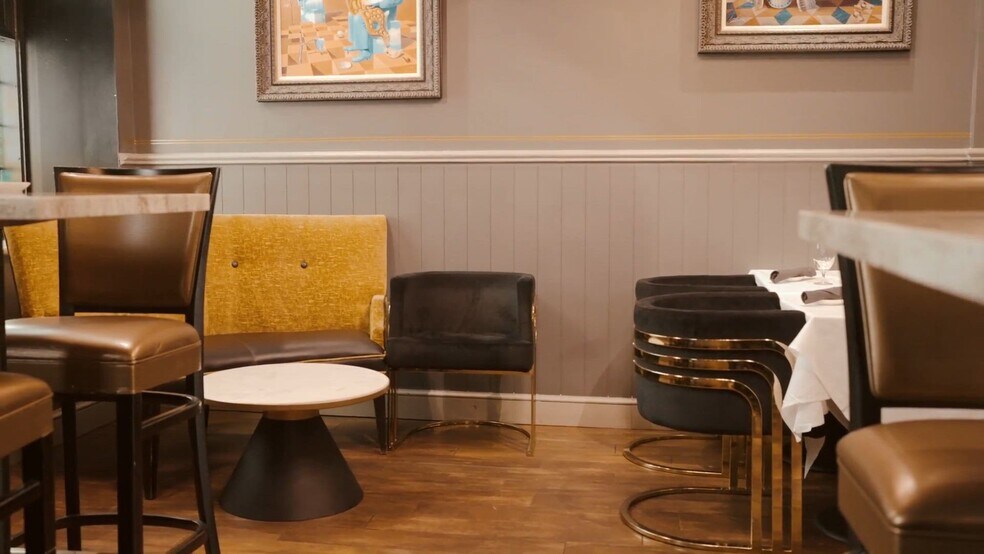
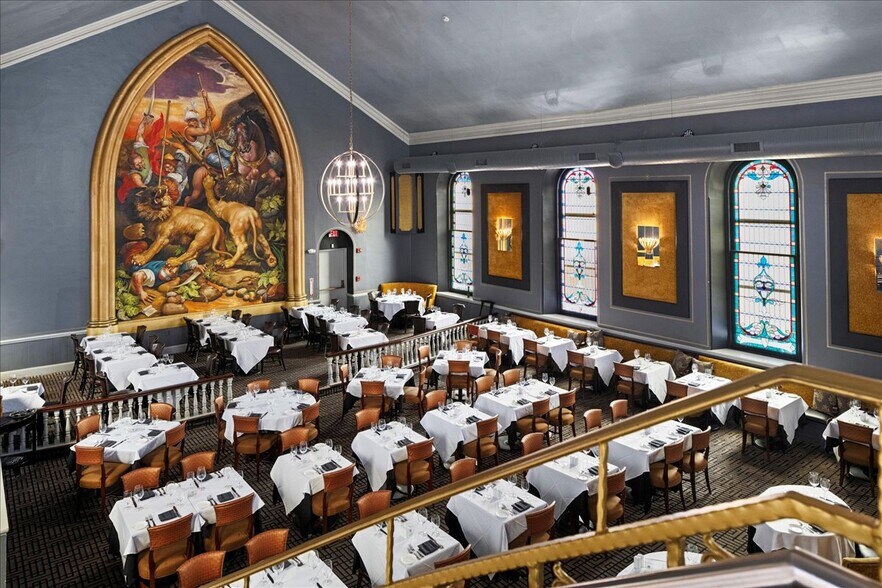
- Turn Key Successful Restaurant in the heart of New Hope Borough
- Multiple Dining Areas
Résumé de l'annonce
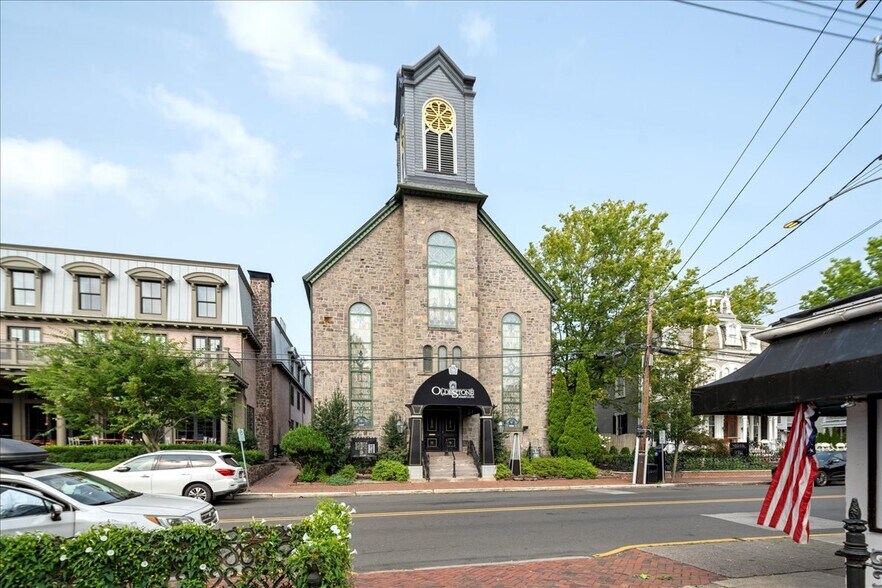
The distinguished structure now home to Oldestone Steakhouse began its life in 1873–1874 as the New Hope Methodist Episcopal Church, later known as the New Hope United Methodist Church. Built on land purchased for $600, it stood between two other historic landmarks—the Logan Inn and the Crook home, now the Mansion Inn. Designed by architect James Bird and constructed with the stonework of mason Peter S. Naylor, the building was valued at $14,000 upon completion. Its Gothic sandstone façade, soaring ceilings, and intricate stained glass windows made it an architectural treasure from the day it opened.
The church replaced an earlier wood-frame Methodist church on Mechanic Street, which had fallen into disrepair. While no photographs of the original structure are known to exist, its cemetery remains adjacent to the municipal parking lot. For 125 years, the building served as a spiritual center for New Hope’s Methodist community. Its congregation included both African Methodist Episcopal members in the early 1800s and white Methodist groups by the 1830s, reflecting the religious diversity and energy of the Second Great Awakening, a revival movement that swept America between 1795 and 1835. The final service in the building was held in 1999, after which the congregation relocated to Solebury.
Following its closure as a church, the building entered a new chapter as Marsha Brown’s, a Creole-inspired fine dining restaurant that operated for nearly two decades. Known for its dramatic ambiance and refined cuisine, Marsha Brown’s became a dining destination in New Hope before closing during the COVID-19 pandemic. In 2021, the space was reimagined as Oldestone Steakhouse, a modern metropolitan steakhouse that honors the building’s architectural grandeur while offering USDA Prime steaks, fresh seafood, and craft cocktails. Many of the original features remain intact, including the stained glass windows, repurposed church pews, a striking 30-foot mural titled Redemption by Russian artist Valeriy Belenikin, chandeliers featured in John Wick 3, and a speakeasy-style jazz lounge on the third floor.
New Hope itself has a rich history dating back 10,000 years, when the Lenni-Lenape Native Americans settled along the Delaware River. In the early 1700s, William Penn authorized land sales that led to the founding of the town. Originally known as Coryell’s Ferry, the area became a vital crossing point on Old York Road, the main route between Philadelphia and New York City. George Washington lodged in New Hope the night before his famous crossing of the Delaware River in 1776 and later ordered the ferry destroyed to prevent British pursuit. The town endured shelling during the Revolutionary War, and some buildings are still said to contain unexploded ordnance in their rafters.
In the 19th century, the opening of the Delaware Canal in 1832 transformed New Hope into a thriving trade hub. Officially incorporated in 1837 after a devastating fire destroyed Benjamin Parry’s mills, the rebuilt town was seen as a “new hope” for the community, giving rise to its name. The 20th century brought a cultural renaissance, with New Hope becoming a haven for Pennsylvania Impressionist painters such as Daniel Garber and Edward Redfield, and the Bucks County Playhouse, opened in 1939, attracting theatrical luminaries including Helen Hayes, George C. Scott, and Robert Redford. In 2002, New Hope made history again by becoming the first borough in Pennsylvania to ban discrimination based on sexual orientation and gender identity.
Today, the building at 15 South Main Street remains an integral part of New Hope’s living history. Preserved through the work of the New Hope Historical Society, it stands as a testament to the town’s evolution from a colonial ferry crossing to a vibrant cultural and culinary destination. Its transformation from church to celebrated restaurant captures both the spirit of preservation and the creativity that defines New Hope.
The church replaced an earlier wood-frame Methodist church on Mechanic Street, which had fallen into disrepair. While no photographs of the original structure are known to exist, its cemetery remains adjacent to the municipal parking lot. For 125 years, the building served as a spiritual center for New Hope’s Methodist community. Its congregation included both African Methodist Episcopal members in the early 1800s and white Methodist groups by the 1830s, reflecting the religious diversity and energy of the Second Great Awakening, a revival movement that swept America between 1795 and 1835. The final service in the building was held in 1999, after which the congregation relocated to Solebury.
Following its closure as a church, the building entered a new chapter as Marsha Brown’s, a Creole-inspired fine dining restaurant that operated for nearly two decades. Known for its dramatic ambiance and refined cuisine, Marsha Brown’s became a dining destination in New Hope before closing during the COVID-19 pandemic. In 2021, the space was reimagined as Oldestone Steakhouse, a modern metropolitan steakhouse that honors the building’s architectural grandeur while offering USDA Prime steaks, fresh seafood, and craft cocktails. Many of the original features remain intact, including the stained glass windows, repurposed church pews, a striking 30-foot mural titled Redemption by Russian artist Valeriy Belenikin, chandeliers featured in John Wick 3, and a speakeasy-style jazz lounge on the third floor.
New Hope itself has a rich history dating back 10,000 years, when the Lenni-Lenape Native Americans settled along the Delaware River. In the early 1700s, William Penn authorized land sales that led to the founding of the town. Originally known as Coryell’s Ferry, the area became a vital crossing point on Old York Road, the main route between Philadelphia and New York City. George Washington lodged in New Hope the night before his famous crossing of the Delaware River in 1776 and later ordered the ferry destroyed to prevent British pursuit. The town endured shelling during the Revolutionary War, and some buildings are still said to contain unexploded ordnance in their rafters.
In the 19th century, the opening of the Delaware Canal in 1832 transformed New Hope into a thriving trade hub. Officially incorporated in 1837 after a devastating fire destroyed Benjamin Parry’s mills, the rebuilt town was seen as a “new hope” for the community, giving rise to its name. The 20th century brought a cultural renaissance, with New Hope becoming a haven for Pennsylvania Impressionist painters such as Daniel Garber and Edward Redfield, and the Bucks County Playhouse, opened in 1939, attracting theatrical luminaries including Helen Hayes, George C. Scott, and Robert Redford. In 2002, New Hope made history again by becoming the first borough in Pennsylvania to ban discrimination based on sexual orientation and gender identity.
Today, the building at 15 South Main Street remains an integral part of New Hope’s living history. Preserved through the work of the New Hope Historical Society, it stands as a testament to the town’s evolution from a colonial ferry crossing to a vibrant cultural and culinary destination. Its transformation from church to celebrated restaurant captures both the spirit of preservation and the creativity that defines New Hope.
Faits sur la propriété
| Prix | 9 405 661 $ CAD | Classe d’immeuble | C |
| Prix par pi² | 1 517,04 $ CAD | Taille du lot | 0,24 AC |
| Type de vente | Investissement ou propriétaire utilisateur | Taille du bâtiment | 6 200 pi² |
| Type de propriété | Spécialité | Nombre d’étages | 2 |
| Sous-type de propriété | Eglise | Année de construction | 1872 |
| Zonage | CC, New Hope Boro | ||
| Prix | 9 405 661 $ CAD |
| Prix par pi² | 1 517,04 $ CAD |
| Type de vente | Investissement ou propriétaire utilisateur |
| Type de propriété | Spécialité |
| Sous-type de propriété | Eglise |
| Classe d’immeuble | C |
| Taille du lot | 0,24 AC |
| Taille du bâtiment | 6 200 pi² |
| Nombre d’étages | 2 |
| Année de construction | 1872 |
| Zonage | CC, New Hope Boro |
Commodités
- Affichage
- Accessible aux fauteuils roulants
- Climatisation
- Détecteur de fumée
- Alimentation de secours/Génératrices auxiliaires
1 1
Assez accessible à pied
50/100
Exceptionnellement adapté aux voitures
100/100
Moyennement accessible en vélo
70/100
Impôts fonciers
| Numéro de lot | 27-010-050 | Évaluation des bâtiments | 220 345 $ CAD |
| Évaluation du terrain | 53 065 $ CAD | Évaluation totale | 273 410 $ CAD |
Impôts fonciers
Numéro de lot
27-010-050
Évaluation du terrain
53 065 $ CAD
Évaluation des bâtiments
220 345 $ CAD
Évaluation totale
273 410 $ CAD

1 de 32
Vidéos
Visite extérieure 3D Matterport
Visite 3D Matterport
Photos
Vue depuis la rue
Rue
Carte
1 de 1

Présenté par
B&B Luxury Properties
15 S Main St - New Hope Methodist Church
Vous êtes déjà membre? Connectez-vous
Hmm, il semble y avoir eu une erreur lors de l’envoi de votre message. Veuillez réessayer.
Merci! Votre message a été envoyé.