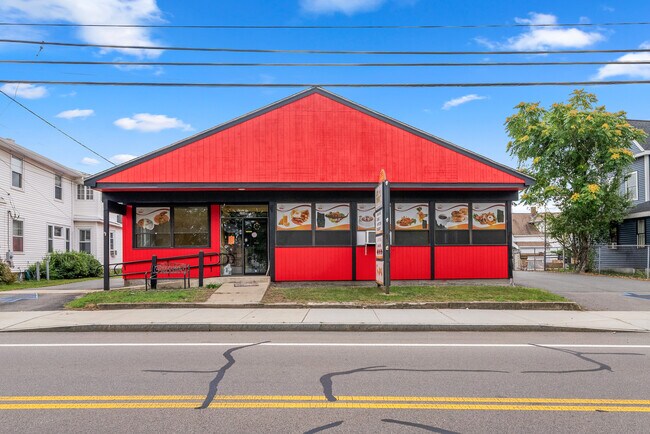
296 Main | Corner + Distribution - 296 Main St
Milford, MA 01757
- Ghost Kitchen
- Retail for Sale
- $1,661,988 CAD
- 4,000 SF
See More

Catering kitchens, or sometimes called shadow kitchens or ghost kitchens are often the hub of any business that cooks food for delivery only. These virtual kitchens typically have everything an aspiring chef needs to create amazing dishes, and they can also be rented for a fraction of what it would cost to buy such kitchen equipment. Without a front of the house, these kitchens allow for lower costs in both staff and floorspace
A catering kitchen is a must for any aspiring restauranteur. These kitchens are designed to serve the needs of both professional and personal catering events. A variety of equipment can be found in these kitchens, including ovens, refrigerators, grills, fryers as well as large work surfaces that allow you to prepare dishes in advance and store them until needed. The size of your catering kitchen will depend on how many people you want to feed at a time. You should also consider whether or not you want an open plan space where all appliances are visible or if it would be better for staff members if the cooking area was separated from the storage area by walls with doors that could be closed when necessary?
The building needs to meet specific codes, and you must make sure that there are enough venting systems and sprinklers installed so that fire extinguishers can reach all parts of the space.
What are the types of commercial properties that work well for catering kitchens?
Catering kitchens can take up as little as 800 square feet. Even smaller catering kitchens with less than 400 square footage typically have a small walk-in refrigerator, one or two cooking stations (gas or electric), storage for food and equipment, dishwasher, sink area with disposal. Larger catering kitchens are great for large size catering or large-scale delivery businesses because they have more storage and cooking stations.
For best efficiency with any layout, you should consider:
The biggest mistake many catering kitchens make is that they don’t manage the flow of operations well enough, which means too much traffic in front of work areas causing slowdowns in the flow.
Catering kitchens come in a variety of shapes and sizes. It is important to note the space available before finalizing your design. If you are limited on space or have a small budget, consider having an open-concept kitchen with only one wall closing off the front area from the back. This will allow for more interaction between staff
It really can depend on the age of the existing equipment and how up to code the kitchen is. Purchasing an existing commercial kitchen would cost more upfront because the previous owner of that facility had already spent money on installing it. When you buy a building, you will have to spend more just for installation costs without any equipment, along with costly and time-consuming permits and construction costs. With an existing commercial kitchen, all the equipment is already installed and ready to go when you walk in.
The design of a catering kitchen is more than just picking out appliances and designing the floor plan. There are many things to consider when designing a new catering kitchen, including ventilation, refrigeration, and lighting. It’s important that your food always remains fresh and cool during storage as well as preparation. You also need to be aware of building codes and permits that may apply to a kitchen for commercial food use.
Looking to lease a Ghost Kitchen? View Ghost Kitchens for lease
